Episode 120: Microservices & The Lean Enterprise with James Lewis

jlewisCraig is at YOW! Conference and has a conversation with James Lewis, best known for his work around microservices at ThoughtWorks. They discuss:

  • Microservices: a definition of this new architectural term” article with Martin Fowler
  • Huge cycle of hype around the term “microservices”
  • You have to run so fast to keep up with the great people at ThoughtWorks you end up accidentally doing interesting things
  • Cruise Control became Cruise that became GoCD which was open source then went commercial and then went back open source
  • Extreme Programming (XP) is complementarianism – the sum is greater than the parts
  • YOW! 2015 talk “Microservices – Building Software that is #neverdone
  • Microservices – systems that are composed of parts that you can independently throw away – the analogy of “My Family’s Axe” (Terry Pratchett)
  • Business and architecture isomorphism – if you look at your architecture you should be able to see your business represented in it and vice-versa
  • Disruption is causing organisations to think about organisational design as well as architectural design
  • Microservices is a style that is applicable for certain circumstances, it is not one size fits all – follow the 16th rule of Unix programming “distrust all claims for one true way”
  • For microservices, Amazon and AWS was the game-changer
  • If you are not building software using the Agile practices these days, you have probably gone down “the wrong trouser leg of history
  • Lean Enterprise is an evolution and description of current thinking
  • Geek crushes on Don Reinertsen and Dan North
  • Agile methods need to focus on flow rather than scaling and structure
  • ThoughtWorks Technology Radar – point in time snapshot on what is going on in current projects, throw systematic darts at the wall, vote on over 300 items to whittle down to 100 items,
  • Stationery driven decision making – sticky notes!
  • Sam Newman book “Building Microservices

TheAgileRevolution-120 (31 minutes)
Episode 119: Agile (Raccoon) is Dead with “Pragmatic” Dave Thomas

davethomasCraig and Tony are at YOW! Conference and get the opportunity to sit down with Dave Thomas, signatory to the Manifesto for Agile Software Development and have a great discussion about:

  • Dave’s talk “Agile is Dead (Long Live Agility)
  • Agile as a word has become meaningless, don’t follow the off-the-shelf processes, apply small corrections to move forward
  • Story of Stone Soup is like Agile consultancies, the hard work is done by the companies
  • Scrum is a good starting point due to its simplicity
  • Raccoon is a noun, so not a good replacement name for Agile, because you can buy a pound of it
  • 1,000 working on one thing can never be Agile, you have to make enterprises agile before you can run an agile project
  • The values in the Agile Manifesto hold up well, would have been nice to have had more diversity, had no expectation they were going to create something so significant
  • The Agile Manifesto was a reaction to the problems in development at the time, maybe something new is required, it would be a tragic mistake to create Agile Manifesto 2.0, we need to ask what is more relevant today to express our frustrations
  • Agile is a fundamental way of thinking about doing stuff, that’s why it’s important to understand why we are doing it
  • The Pragmatic Programmer” started as a set of field notes and somehow became a book that still sells well today despite some of the dated examples  and it invented terms like DRY (don’t repeat yourself)
  • The Pragmatic Bookshelf was accidental by saying the dreaded words “how hard could this be”, the strength is knowing nothing about publishing, everything was automated unlike traditional publishers and still runs with 2 main employees, now storyboard books like a movie as the reader is on a learning journey
  • Ruby has a future, but it needs to distinguish itself as a fantastic general purpose programming language, the community is still very friendly and innovative
  • The emphasis and dogma around testing is off-putting, the amount of effort around many tests are not moving people forward

TheAgileRevolution-119 (40 minutes)


Episode 118: YOW! 2015 Brisbane Vox Pop

yow_2015_conference_-stacked-pngCraig and Tony are once again roaming the lunch hall at YOW! 2015 in Brisbane, where they catch up with a number of people including:

TheAgileRevolution-118 (30 minutes)

Episode 117: The Changing Role of a Tester with Mark Pedersen

mpCraig is at the YOW! Connected conference and talks to Mark Pedersen, the CTO at KJR, and they talk all things quality and testing:

  • the changing role of a tester in an Agile environment, it clarifies the role rather than making it blurrier
  • in an Agile environment it does not make sense to have a Test Manager role anymore
  • the number of dedicated testing roles are decreasing, but becoming more important and valuable
  • most organisations say that they use both waterfall and agile frequently
  • build your skills in either a quasi analysis / product owner / acceptance criteria role or get up to speed with sensible technical automation tools for your tech stack
  • TDD – good idea but not many organsations practicing it in a dedicated way, unit testing in most industries is a luxury
  • BDD – does not make TDD obsolete, defining acceptance criteria upfront helps understand what we need to code
  • pair programming – does not deliver much benefit from a test perspective, unless the tester has technical expertise, adoption is still very low
  • YOW! Connected talk “Building Mobile App Test Automation
  • mobile testing is challenging and IoT will take it to another level – customer expectations are higher for these devices, they are thought of more like traditional mechanical devices
  • mobile and IoT is driving the demand for testers to become more technical – more API and distributed technology tests

TheAgileRevolution-117 (37 minutes)

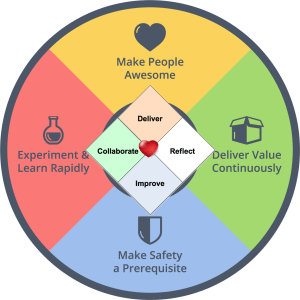
Episode 116: The Heart of Modern Agile

heartmodernagileCraig and Tony are sipping a sarsaparilla or two on a balcony in Brisbane and start trying to dissect the state and heart of modern agility:

TheAgileRevolution-116 (46 minutes)

Episode 115: Connecting Developers & Designers with Chris van Raay & Tom Brodhurst-Hill

115At the YOW! Connected conference, Craig sits down with Chris van Raay and Tom Brodhurst-Hill and talks about bridging the gaps between developers and designers:

  • Chris van Raay talk “Bridging the Designer – Developer Divide
  • Tom Brodhurst-Hill talk “Design Driven Mobile Development
  • Typically most organisations have separated development and design teams which results in a very linear process
  • Need simple design documentation as a “single source of truth” because you shouldn’t need to specify styles more than once and it helps reduce effort and obtain a consistent design
  • Use tools such as PaintCode to create a colour palette which serves as documentation as well as a static analysis test
  • Need leadership to ensure there is an agreed approach, set the standards and create discipline
  • When building features need to decide when to leave work that is consistent across features, in relation to design, this should be a special amendment to the definition of done
  • Process can get in the way of achieving good things sometimes
  • Small thin slices do not work well for design, UX flow is the bare minimum you need, then you can have separate threads of development for front end and back end and evolve the app over time

TheAgileRevolution-115 (24 minutes)

Episode 114: The Responsibility Process with Christopher Avery

caveryCraig and a late-arriving and quietly spoken Renee talk to Christopher Avery, author of “Teamwork is an Individual Skill” and the visionary behind The Leadership Gift and The Responsibility Process, at Agile 2015 in Washington, DC:

  • Management science says that the problem of business performing highly and being profitable and people having a life at work are highly at odds with each other, Agile has challenged that
  • Organisational Agility and self organising teams have been around since the late 80’s / early 90’s
  • Keynoted the first combined XP / Agile Universe Conference in Calgary 2004
  • The Responsibility Process is now in 26 languages, including Klingon
  • The Responsibility Process is a naturally occurring pattern that occurs in our mind that shows how we respond to upset or frustration in ways that we either cope with it or take responsibility to learn and grow
  • Correlation between The Responsibility Process and the 7 stages of grief
  • You go through each stage, even if it is for a microsecond
  • The mental state of responsibility is available to you all the time
  • Listen for yourself saying “I have to…” then catch it and change it to a statement you are willing to own like “I am…” or “I choose…”
  • The Responsibility Process Game – each day score yourself for when you heard it, said it or caught it
  • Research started in 1984 and collected through participant observation and interaction
  • “The first job of a leader is to define reality” Max De Pree
  • First principle of leadership of The Responsibility Process – “No group in an organisation will consistently operate at higher levels of responsibility than the people to whom they report”
  • The Leadership Gift program for individuals via christopheravery.com and corporate solutions as well via Partnerwerks
  • The Responsibility Process book (coming soon)

TheAgileRevolution-114 (28 minutes)

Episode 113: GreenHopper Handyman Folio with JC Huet

JCHuetCraig and Renee, sitting on the banks of the Potomac River on a sunny but slightly windy day at Agile 2015, they catchup with JC Huet, creator of GreenHopper (renamed to JIRA Agile and post-podcast now JIRA Software) and Tempo Folio:

  • Craig was apparently the first client of GreenHopper that was built in a basement, now JIRA Agile is the most popular JIRA add-on with over 500,000 users, used by more than 80% of JIRA users
  • the idea was to have a tool that brought bugs into software management
  • the name GreenHopper represented the Green company branding at the time, and Hopper was for cards hopping between columns
  • a shout out to our friend Nick Muldoon (who is now writing Atlassian plugins at Arijea)
  • Tempo Folio plugin is about supporting cost management, including time sheeting, estimation, forecasting and allocation
  • time and dedication and about three months is all it takes to create an Atlassian plugin (and JC challenges Renee to write her own WSJF plugin)
  • hippies, not EP’s!
  • versions on frameworks are good, means feedback changes are coming

TheAgileRevolution-113 (34 minutes)

Episode 112: Inside Spotify with Anders Ivarsson

AndersRenee and Craig are at the Agile Australia conference and talk to Anders Ivarsson, an organisational coach at Spotify, and learn some of approaches that make Spotify tick:

  • Agile Australia talk “Autonomy and Leadership at Spotify” and workshop “Organisational Improvement: Design-inspired Problem Solving”
  • Agile Coaches spend time with squads versus a new role of organisational coach that looks at the culture, ways of working, vision and systemic wastes
  • Spotify is not a model
  • Original Spotify scaling paper, never imagined the spread or the impact
  • Spotify have shared a lot of the things that have worked well, but they do also have challenges as well – one is alignment across teams as the organisation gets bigger so they have been working on visualisation and prioritisation
  • Spotify Culture videos (Part 1 and Part 2)
  • use microservices to ensure that the organisation can work in the way they want to work – great autonomy but a challenge in keeping a consistent design language and customer journey
  • Agile culture is spread throughout Spotify, use what works rather than one particular approach
  • The Oath of Non Allegiance
  • POTLAC – Product Owner / Team Leader / Agile Coach – leadership cell at Spotify
  • use internal blogging to share Agile approaches and patterns, started to recognise the value of story telling
  • Agile Product Management in a Nutshell video – Henrik Kniberg is a genius at making things simple and understandable

TheAgileRevolution-112 (24 minutes)

Episode 111: M&Mailbag

peanutmmCraig and Renee, sitting in a shoe-box sized hotel room in Sydney eating peanut M&Ms, decided to rustle through the mailbag and answer a bunch of outstanding questions.

Note: this episode is not sponsored or endorsed by M&Ms but we certainly enjoy their product!

Crossing The Chasm

  • more and more organisations seem to be crossing the chasm to Agile, but too many are still just doing and not being Agile
  • inimal viable product (MVP) is still the trend word, the next stage is Minimal Viable Experience and then Minimal Viable Robustness to Minimal Marketable Product and finally Continuously Evolving Product
  • Enterprise Transformation Meta Model
  • Agile is a true north concept, not sure that you will ever get there

Suggested reading list on where to start with Agile:

What certification should a new Scrum Master get:

Building your own scaled framework

  • Holacracy and Reinventing Organizations
  • need to answer questions around ensuring quality, growing capability, benefits realisation, etc…
  • at what level do the questions need to be answered
  • Minimal Viable Organisations
  • scale on the operational cadence of the problems of the organisation, not following a framework
  • how often do we check that our approach is meeting our needs

Visualising business analysis in a Scrum team

  • 3 Amigos approach
  • call it what it is if you’re sprint length is longer than it is
  • focus more on Kanban flow

Reading List

  • Renee is reading about climate change (and how that applies to Agile) including “This Changes Everything” by Naomi Klein
  • Craig is reading “CTRL-SHIFT” by  Jessie Shternshus and Mike Bonifer

TheAgileRevolution-111 (71 minutes)