Rachel Slattery from Slatterys (organiser of Agile Australia) – 1,200 attendees (a sellout) at the conference, such a good level of goodwill in the Agile community, half of the conference are new people and 60% hear about it through word of mouth, all flavours of ice cream (even coconut apparently…), AgileAus hub for all things Agile in Australia
Melissa Perri keynote “The Build Trap“, teal organisations tend to form like that at inception, other organisations have the people but the process to get there is still hard
Adam Boas and Andy Kelk from Marketplacer – enjoying the deep dive sessions as a way to talk to speakers you normally don’t get the opportunity to talk to, outcomes over output is a key theme at the conference
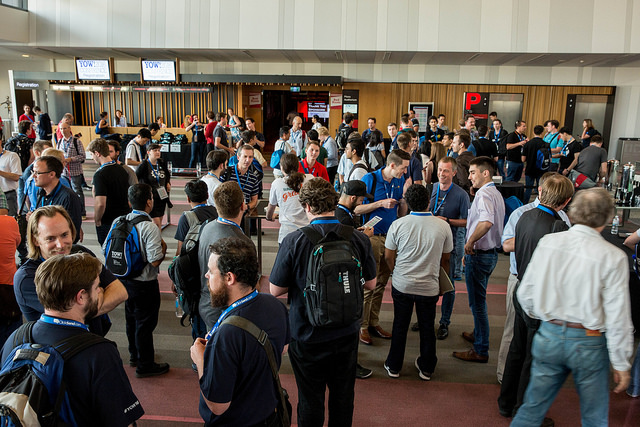
Tony and Craig are at Agile Australia 2017 in Sydney and wander the very busy hallways catching up with attendees and with old friends:
Sieger de Vries – enjoyed Matt Pancino talk “The future of Agile in the enterprise: has the war been lost?”, distributed Agile and use of partnering is here to stay
Sally Greenwood – enjoyed Matt Pancino talk, the advocates at CommBank already existed they just needed to make it happen, “it’s not about scaling agile up, it about descaling the organisation”
Leadership is the ability to adapt the environment so that everyone is empowered to contribute creatively to solving the problem
Need to develop the people we are leading as well as the environment
Need a bigger overlap of the knowledge in organisations so that we can make better decisions
Systemic failure that we assume because you are good at something (like software development) you will be good at management / leadership – they are very different skills
Three C’s – clarity (people know what to work on and how it fits into the big picture), conditions (the means to do the work and access to resources required) and constraints (guidelines to know to act and decide) – things you need to consider if you want to move a complex, adaptive system and build empowered teams
Need to focus on the work that needs to be done not just on the little boxes or our job description
Ask the question to leadership – what are you willing to change?
Whilst smaller organisations can focus on the team, bigger organisations have to focus on the systemic level to make any visible difference
People are interested in the allure of the Agile benefits and what to cherry pick in relation to practices, the same happened with TQM and Lean – need to ask what next shift will help you deliver value to your customers
The millenials will be a big disruptor to management practices
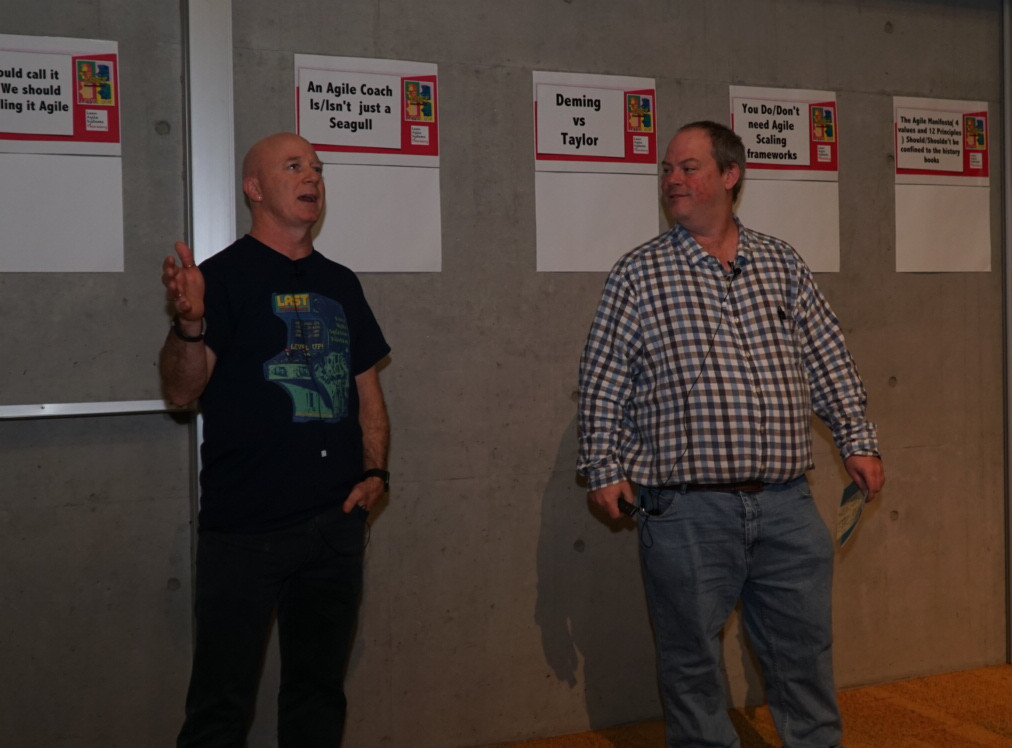
Craig and Tony are at LAST Brisbane 2018 in their home town of Brisbane and wander the lunch hall speaking with members from the local Agile community:
Test Driven Development is something you learn over very many difficult weeks or months, it is a hard concept to teach, it is becoming more accepted but still slowly
“Clean Code” – had to abandon a tradition in software development when writing this book and laid out rules telling people what to do
“The Clean Coder” – was a backlog from “Clean Code” about how to be a professional programmer
The ranks of programmers are doubling every 5 years, so half the people doing the work have less than five years experience, the industry is in a state of perpetual inexperience
Craftsmanship movement began as a response to the technical community feeling like they were kicked out of the “agile” house that they built as it became more about people and process – the desire is to bring the two camps back together
Kent Beck said “The goal of agile was to heal the divide between technology and business” – the focus has been mostly on the business side
We need a set of ethics and standards that define a profession for software development – the agile and software craftsmanship communities are the right ones to do this as it needs to be done by practitioner
Craig and Tony were privileged to be asked to be the keynote speakers at LAST Brisbane 2018. This is the audio from the keynote with introductions from long time listener Dave Pryce. You can follow along with the slides below:
There are anti-patterns with doing XP at scale, continuous delivery was born from the learnings from that
Continuous delivery is just extending continuous integration to more of the software development practice (and continuous integration requires test driven development)
Continuous delivery works because it is the application of the scientific method to software development
If you work in an iterative, imperative, experimental way and you take continuous learning seriously and take cycle time as a serious measurement you will naturally drive out agile, lean, systems theory and DevOps
Most common two ways to introduce continuous delivery to your organisation – need to get cover from senior management to make change or you do it secretly at the grass roots – the fast feedback cycle is important (build feedback in about 5 minutes and ready and deployable in about an hour)
DevOps is a terrible name – we are talking about collaborative cross functional teams and it is more than just developers and operations
Continuous delivery is focused on shortening the feedback cycle from having an idea to getting the idea into the hands of users and figuring out what our users make of the idea – that’s software development, to do whatever it takes
Continuous delivery is working in a way so that my software is always in a releasable state, continuous deployment is if all my automation says my software is in a working state I can just automatically push it to production
We have data to show that continuous delivery makes high quality software faster, creates more money for the organisations that use it, reduces defect rates significantly and makes people working in that environment happier
It changes the way you design, approach databases and the way you test
Continuous Delivery tools still aren’t mature enough
The deployment pipeline is a seriously strategic resource because it is your only route to Production – need to be able to version and test it like any other Production code
It’s as much about the culture of the team than it is about the technology, it frees teams up to do experimentation
Rob, Declan, Daya, Braiden and Homad all enjoyed Dr. Brian Little’s “Personalities at Work” keynote, Andrea Burbank’s fast paced talk and the benefits of volunteering at a big tech conference
Evolutionary Architecture is the next stage on applying Agile practices to software development at the systems level and be able to respond to changes in the environment that affect the architecture
Need to determine for your system what constitutes good, fitness functions are the documentation and tests to ensure your system meets those characteristics
Need to move the needle on architecture, need to develop tools and techniques to decompose the role
CTO role is more now to set technical direction by setting up communication channels to mine insights that can be rolled out and presented to the market
ThoughtWorks Tech Radar started as a hot technology list of what ThoughtWorkers would love to work on, became a visual radar that is now released twice a year, starts with 250-300 items and they try to get it down to 100 items, something will fade after being in the adopt ring more than twice, the radar is also available as an open source tool or radar as a service
Women leave technology at double the rate as men leave technology, mostly because they are not treated well in the environment
The Agile community recently lost its friend and one of its most inspirational members in David Hussman. Craig and Tony were privileged to speak to him in one of his last interviews at YOW! Conference in Brisbane.
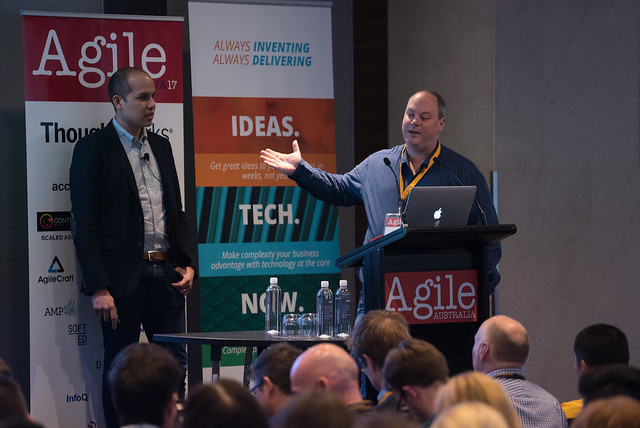 Craig and Tony are once again roaming the halls at Agile Australia in Sydney and finding random folks to talk to at the conference: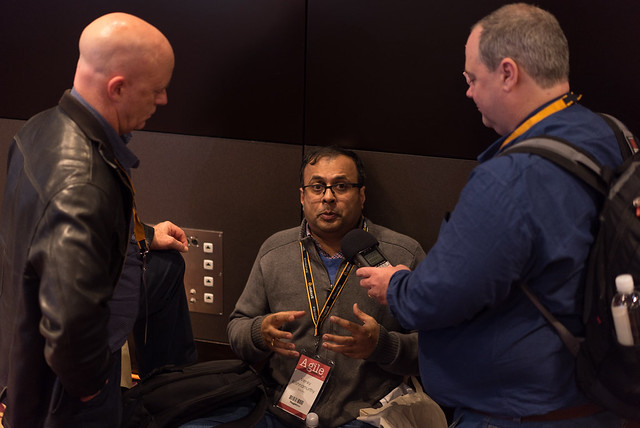

 The Agile Revolution Podcast